
· ·
Designation is the first question on an older Pasadena roof. Pasadena sits in Los Angeles County, California, and the City keeps its own map of designated landmark districts. An exterior change inside one of them may need City review first.

Designation Decides Whether the City Reviews Roofing Material
City review of an exterior change comes before a building permit. The same map lists the eligible but undesignated districts separately. Those areas carry no Certificate of Appropriateness duty.
Nothing on a building announces which list it is on. Bungalow Heaven, Garfield Heights and Washington Square are designated. Madison Heights and Oak Knoll sit on the eligible but undesignated list.
Eligible but undesignated is a real status with a real meaning. It is not a weaker form of designation.
The label records that a district could qualify. It creates none of the duty that designation creates.
The lists cover districts rather than single buildings. A district is a group of properties the City mapped together. An address either falls inside a mapped boundary or it does not.
Age alone places an address in neither group. Two houses on the same block can land differently. The map follows district lines and not the style of a house.
Designation carries a public record. So the status of an address is on record. City staff can confirm where a given address sits.
An old street is not always a regulated street. That difference changes the material choice more than anything else here.
| Status in the City record | What follows for roofing |
|---|---|
| Designated landmark district, 28 in total | A proposed exterior change may need a Certificate of Appropriateness before a building permit. |
| Eligible but undesignated, 47 in total | The City records that the area could qualify. No Certificate duty attaches to it. |
What a Certificate of Appropriateness Covers
A Certificate of Appropriateness is the City's review of a proposed change to a designated resource. Pasadena's designation and incentives page explains when a change inside a designated landmark district may need one. It also separates routine maintenance and other exempt work.
Roof work is an exterior change. So the scope of the work decides where it lands. Only City staff decide which description fits a given project.
Like-for-like repair
Replacing broken pieces in an existing tile field leaves the rest of the tile in place. The material, the profile and the roof form all stay where they were.
A change of material or form
Re-covering a roof in a different material reads differently. So does a change to pitch, overhang or a dormer.
Those are the projects where the review question comes first. The roofing scope follows from there.
A review step before permitting can change the schedule. It can also change the materials approved for the project.
Describing the work clearly is the part a roofer controls. A good scope names which pieces come off, what goes back, and what stays the same. That gives staff something plain to read.
Our part stays narrow. We describe the existing assembly.
We put the proposed work in plain language. We build what an approval allows.
What the City's Design Guidelines Say About Roof Material
The review works from Pasadena's Design Guidelines for Historic Districts. They ask that a new roof carry a scale and texture similar to traditional work. They also note that composition shingle dominates current use across the districts.
The guidelines ask that a specialty material such as tile be replaced with a match wherever feasible. That line is what a tile project gets read against. Matching material points back to the tile already on the building.
Texture is doing real work in that guidance. A clay barrel field and a flat composition field read differently from the street. They read differently even at the same color.
Roof form gets the same treatment as material. The guidelines ask that the shape of the roof stay legible. Form belongs in the conversation as much as the covering does.
Composition shingle sits in an odd position in these districts. The guidelines record that it already dominates. So a shingle roof is often what the house already has.

The City's historic preservation documents page explains how staff review a Certificate application. Staff read applications for landmark and historic districts against those guidelines.
Keeping the Original Tile Meets the City's Material Guidance
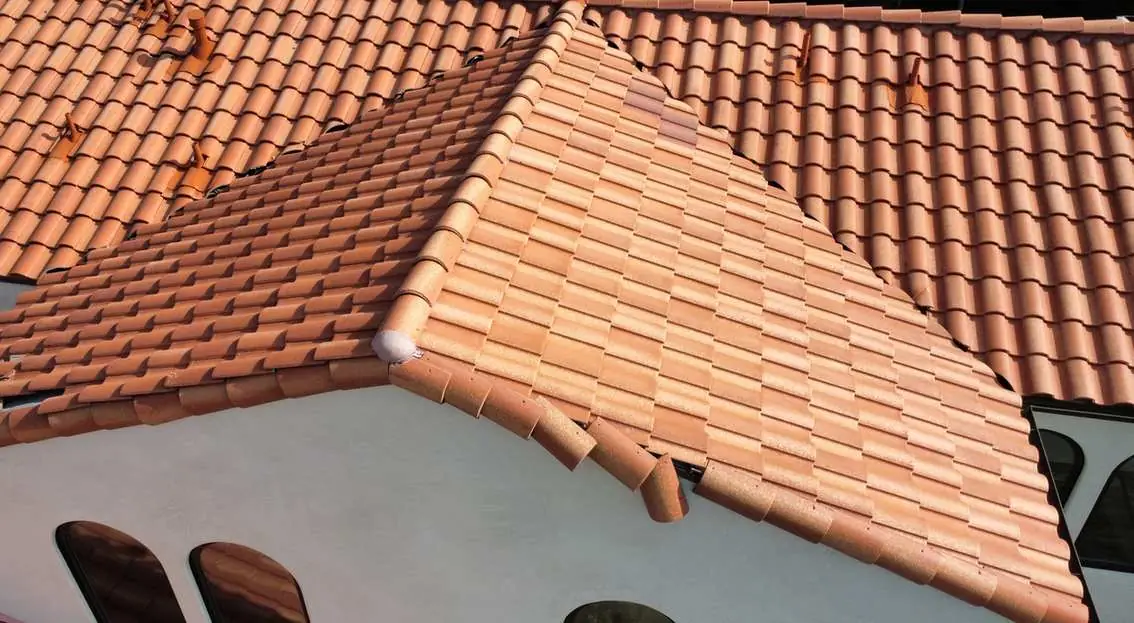
Keeping the original tile meets that guidance directly. The matching material is already on the building.
Under a clay or concrete tile roof, the first layer to fail is the underlayment. It sits beneath the tile.
So an old tile roof usually needs a new waterproof layer under the same tile. Renewing that layer puts the same tile back on the building. That is what the guidelines ask for.
A relay also leaves the roof form alone. The guidelines raise that point too. Nothing about the pitch, the overhang or the ridge line changes when the same tile returns.
How that work runs sits on our tile underlayment replacement page. It also covers what happens when the deck underneath turns out to be damaged.
Breakage is normal on old tile. A plan for matching pieces belongs in the scope from the start.
Some profiles crack during handling. Some fields have too little sound tile left to cover the roof.
Nobody can tell which case applies before a section is open. Call (626) 240-1360 if you want that walked through for your own roof.
Metal Draws Extra Scrutiny in a Designated District
The City's design guidelines state that, in general, metal roofs are inappropriate for historic structures. That line sits inside a document written for landmark and historic districts.
The City applies it when reviewing a proposed change to one. It creates no rule for a house outside those boundaries.
The reason behind the guidance is visual. A standing seam profile changes the texture and the shadow line of a roof plane. A district's character comes largely from those repeated planes.
Metal turns up on older buildings in small quantities anyway. Flashing, valley metal and a porch roof can all be metal. The main field of the same house may be tile or shingle.
A metal covering in a designated district is an exterior change. It goes through the same review as any other. The district question therefore comes ahead of the material question.
Standing seam metal is one of the systems we install, and the setting decides where it belongs. Inside a designated district, we expect the guidance to steer the choice. It points toward a matching or compatible material.
Pasadena's District Rules Stop at the City Line
Landmark district rules apply inside the City of Pasadena and nowhere else. Altadena sits in unincorporated Los Angeles County.
A Pasadena district rule does not reach an address there. The two places sit beside each other and answer to different rulebooks.
A landmark district exists because a city created it. The boundary that created it also limits it. A property a short drive away can sit under a different process.
That matters when advice travels by word of mouth. What a neighbor went through on their roof may have happened under another jurisdiction's process.
We keep the two jurisdictions apart in writing and in conversation. We name the source whenever a rule comes up.
What is a Certificate of Appropriateness?
The City defines it as written approval for a proposed change to a historic resource. It confirms that the change meets the applicable standards and historic district guidelines.
The City requires it before a building permit where it applies. City staff confirm whether it applies to a specific address and scope.
Confirm the Designation, Then Choose the Material
Confirm the district status with the City's preservation staff first. Then call (626) 240-1360 and go through the material options with us.
Bring the address and the roofing material on the house now. That is enough for a first conversation about what the guidelines would ask for.
Designated districts include Historic Highlands, Bellefontaine, Governor Markham and South Grand-Covington Place. The City publishes every boundary.
A roof inside one of them is worth a careful scope. We write ours in the language the review uses.