
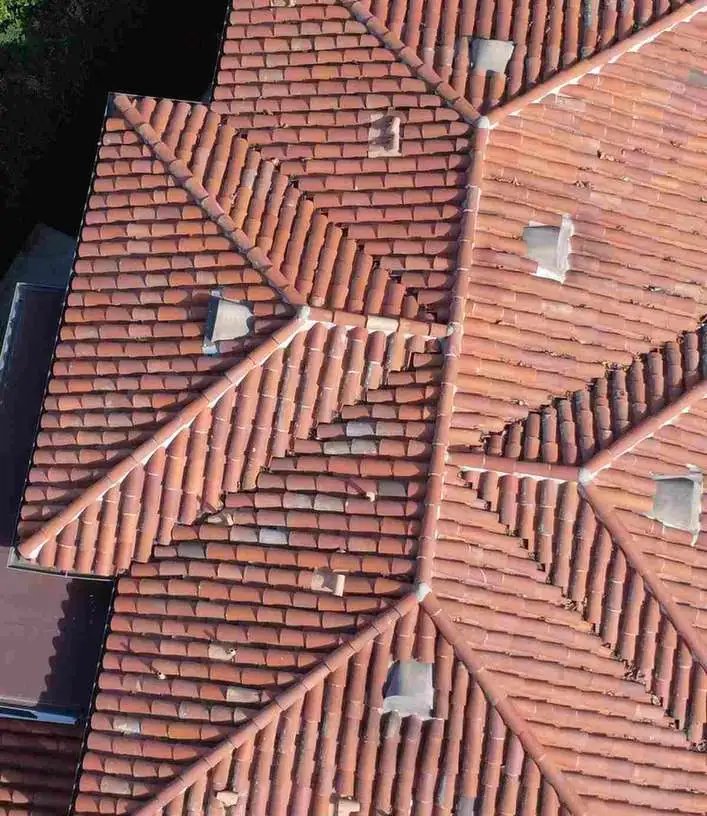
Your tile can look sound from the street while the waterproof layer beneath it has given out. Replacing that layer means lifting your tile off in sections and laying fresh material across the deck. Your own tile then goes back down over the new underlayment and the renewed flashing.

Call (626) 240-1360 and we will quote that lift-and-relay work at no charge to you. The tile profile and the rough age of the house are enough to get that started.
What Tile Roof Underlayment Does
Underlayment is the waterproof sheet that sits between your roof tile and the wood deck below. That hidden sheet is the layer keeping rain out of the rooms underneath it. Your tile sheds most of the water and shields the sheet from sunlight and impact.
Once the sheet tears or pulls away from its fasteners, water starts reaching the decking. Tile is the part anyone sees from the sidewalk, and a spent layer hides behind sound tile.
Clay, concrete and slate tile all rest over some version of that sheet, on battens or on the deck. The Tile Roofing Industry Alliance publishes an installation manual for concrete and clay tile. That manual treats underlayment and flashing as working parts of the tile assembly itself.
Intact tile tells you very little about the sheet hidden below it. That layer needs its own check, and a relay renews it under the tile you already own.
Signs the Layer Under Your Tile Has Failed
Failed underlayment usually shows up as water inside the house while the tile above still looks sound. Slipped tile, damp sheathing in the attic and grit washing out at the eaves point the same way. Repairs that keep coming back to one corner belong on that list as well.
A ceiling stain under intact tile can also trace back to a torn lap, a valley or a pipe. Tile that slides or sits unevenly usually means the fasteners have lost their hold in soft wood.
Where the same slope keeps wetting the same ceiling, the layer under that slope is usually spent. We lift tile in the suspect area once the relay work starts. Those few pieces show the sheet, the fasteners and the wood.
One active leak in a single location is a different job from a whole-slope relay. Tracing water back to its entry point starts there, and quite often it ends there too.
Where a buyer or an insurer wants the condition written down, ask us for a documented roof report instead. That written report is paid work, and it stays separate from the free lift-and-relay quote.
How We Lift the Tile and Replace the Underlayment
Lift and relay means taking your tile off in sections and replacing everything underneath it. Our crew strips the old material, repairs damaged decking, then lays new underlayment and fresh flashing.
- Lifting and stacking the tile comes first, and we set each piece down clear of foot traffic.
- Stripping the old layer takes off spent underlayment, old fasteners and any battens, down to bare decking.
- Reading the wood comes next, and we check the sheathing for rot, delamination and old fastener damage.
- Repairing the decking swaps bad boards for new sheathing, so the new layer lands on something solid.
- Laying the new underlayment and metal puts the sheet on in lapped courses, with renewed valley and wall flashing.
- Restacking your tile closes the relay, with field, hips and ridges re-secured and broken pieces swapped out.
We open one section of roof at a time instead of stripping the whole field at once. Nails, staples and hardened mortar all leave the roof along with the old underlayment. Leaving any of that behind would put fresh underlayment straight over old fastener holes.
Wall lines, chimneys, valleys and pipe openings are the transitions that flashing has to close. We rebuild each of those details while your tile is stacked off the roof.
What the Lift Uncovers Under Your Tile
Decking condition stays hidden until the tile and the old sheet have both come off. We show you whatever the lift turns up before any new material covers it again. Anything that changes the scope goes into your quote before our crew carries it out.
- Soft or delaminated sheathing where water has been reaching the wood for a long while.
- Old fastener damage, including nails that backed out of the deck or tore through the sheet.
- Rotted battens under a tile field that has lost its line, which shows from the yard first.
- Crumbled mortar at hips and ridges, where those courses sit on bedding or a raised nailer.
- Wet wood well away from the break, because water travels down the slope before it appears.
We open a wider area than the obvious damage, so the repair covers the real edge of wet wood. Some roofs hide a soft valley or a wet section behind a chimney that never showed inside. Other roofs come apart clean, with sound wood right across the entire tile field.

Putting Your Own Tile Back on the Roof
Your original tile goes back down as soon as the new underlayment and flashing are in place. We handle every piece twice during a relay, so a share of the tile breaks. Some pieces were cracked under the field already, and we allow for that breakage when we quote.
How much tile survives depends on the profile, the age and how brittle the pieces have become. Any count of surviving tile made before the lift begins would only be a guess.
If your tile profile has been discontinued, we tell you before any tile comes off the roof. Available replacement pieces may not match your field exactly, and you decide where they go.
Wider decisions about the tile system belong with clay, concrete and slate tile work. Relay work starts from the tile you already own and keeps that material on the building.
Relaying Original Tile on a Designated Historic Property
Relaying your own tile keeps the original roofing material on a designated historic building. That result is what Pasadena's historic guidance prefers on the properties it actually covers. The City publishes design guidelines for historic districts that address replacement roofing materials.
Those guidelines say a specialty material such as tile should be replaced with matching material wherever feasible. Whether a material review reaches your address depends on the property, and the City settles that.
Our guide to historic-district roofing works through how the City's separate lists differ.
When a Relay Is Not the Right Job
A relay earns its place when the tile is sound and the decking is mostly solid. It also needs the leaks to trace back to the layer sitting under the tile. Those three conditions decide it, and the lift that opens the relay shows them.
Where most of your tile is already cracked, we have nothing sound to lift and put back. Handling brittle tile breaks more of it, and a field that cannot be relaid changes the job.
Sometimes the tile is coming apart and the decking is soft in several separate areas. Then stripping the roof and rebuilding it usually makes more sense for the building.
Tile Underlayment Work Across Pasadena
We take tile underlayment calls from every part of Pasadena, and the relay quote costs nothing across the city. Oak Knoll addresses sit in 91106, and Arroyo Gardens homeowners reach us from 91107. Ross Grove falls inside 91105, and we take Banbury Oaks tile calls from 91103 as well.
A relay may or may not need a roofing permit, and the scope of the work decides that. Our team helps property owners through the permit process. Pasadena's Permit Center confirms the requirement for properties within city limits.
Tile Underlayment Replacement in Pasadena, CA
Tile Underlayment Questions Owners Ask
Is it worth replacing the tile underlayment?
Replacing the tile underlayment is worth it when your tile is sound and the decking is mostly solid. In that situation the relay renews the waterproofing and keeps the tile you already own. Once the tile itself is breaking up across the field, a relay no longer fits, and we say so.
Do you put the same tile back on the roof?
Yes, your own tile goes back on the roof once the new underlayment and flashing are down. We stack your tile on site during the lift and restack it when those new layers are finished. Some pieces break during handling and some were cracked already, so we replace those as closely as possible.
What happens if you find rotted wood under the tile?
We show you the rotted wood before any new material covers that part of the deck again. Soft or delaminated boards come out, and new sheathing goes in across the affected area. That decking work goes into your quote before our crew carries any of it out.
Start a Tile Underlayment Quote
Call (626) 240-1360 and name the tile profile along with the rough age of the house. Tell us as well where water has shown up inside the rooms below that tile. That is usually where a lift-and-relay quote starts.
Ask us whether a relay is right for your roof and exactly which slopes it would cover. We point at the plane, the flashing and the section of deck behind each recommendation. If water is coming through right now, say so at the start of the call.
Our Google Business Profile shows the name Pasadena Roofing Contractors, Pasadena CA. Call (626) 240-1360 and describe the tile field you want lifted. That lift-and-relay quote costs you nothing, whatever the profile and whatever the size of the roof.
Find Pasadena Roofing Contractors on Google Maps
Pasadena Roofing Contractors
Pasadena CA
(626) 240-1360